From One-Off Containers to HPC Production Science: Reproducibility Patterns for Multi-Service Workflows
Modern research software increasingly runs as multi-service stacks: an interactive front end coupled to databases, queues, and distributed or GPU-enabled workers. These stacks are easy to prototype locally with Docker Compose, but the workflow often breaks on shared HPC systems where Docker is unavailable and batch schedulers control all resource allocation. BSSw Fellow Parmanand Sinha will help close that "laptop-to-cluster" gap by documenting and teaching HPC-native translation patterns: treating the scheduler allocation as the orchestration boundary; mapping each "service" to a containerized process launched under the scheduler; using readiness checks in place of depends_on; binding job-scoped scratch for state and outputs; and using SSH tunneling for interactive access when appropriate. Parmanand's project will iteratively develop a small set of reference workflows that demonstrate these patterns end-to-end on HPC, emphasizing portability across common environments.
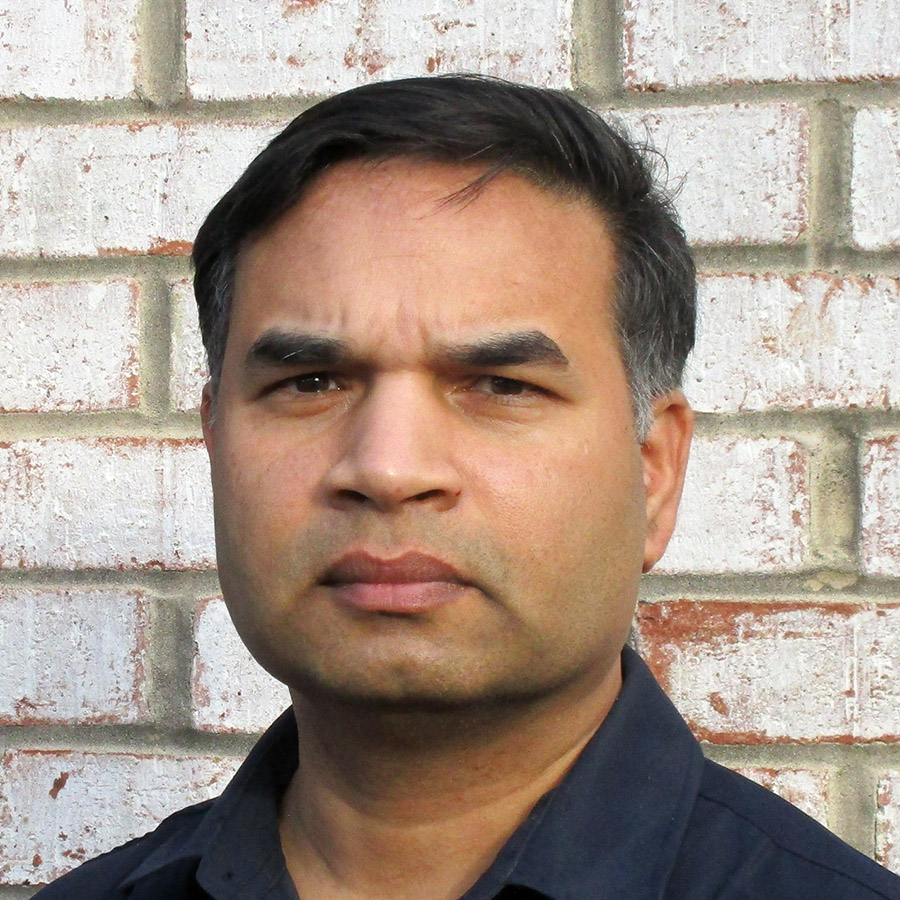
Parmanand is a Computational Scientist at the University of Chicago's Research Computing Center, where he architects scalable platforms that bridge geospatial science, high-performance computing, and modern software engineering. With a background that spans from architecture and urban planning to computational science, he brings a distinctive systems-thinking approach to HPC infrastructure—designing research computing environments as integrated ecosystems where performance, usability, and sustainability work in concert. He holds a Ph.D. in Geospatial Information Sciences from the University of Texas at Dallas and has led the development of production platforms serving interdisciplinary research communities, from healthcare analytics to GPU-accelerated geospatial AI. Through over 40 workshops and training sessions, he has worked to democratize access to containerized, multi-service HPC workflows for researchers who need advanced computational capabilities but lack systems expertise. His fellowship work focuses on making these complex deployment patterns accessible and sustainable for the broader scientific software community.